
University of Leeds and Yorkshire Dales Biosecurity Project

By preventing the spread of INNS in the first place we can avoid damage to the environment and the expense of implementing control measures.
Invasive Non Native Species (INNS) are key drivers of environmental change, threaten ecosystem services and increase flood risk, costing the UK economy ~£1.7bn per year. Once INNS become established, costs of control are large. Introduction of INNS may result from the actions of only one individual, whereas biosecurity practice will require both individuals and organisations to work together to prevent the spread of INNS. The uptake of biosecurity needs to be a collective action across a range of organisations requiring targeted policy to overcome challenges.
Background to project
The Yorkshire Dales Biosecurity and INNS Steering Group was formed in February 2015 to develop a strategic and coordinated approach to biosecurity and the management of invasive non-native species (INNS) in the Yorkshire Dales. It focuses on aquatic and riparian INNS which threaten the local river catchments. The group received funding from the Natural Environment Research Council in 2017 to carry out a project focused on biosecurity, working with key partner organisations. The aim is to identify where the operations of these organisations that have a footfall in the environment across the Yorkshire Dales may pose a risk in regard to the introduction and/or spread of invasive non-native species. It then helps them develop and implement biosecurity protocols and procedures to lessen these risks.
The project has taken best practice advice from the Environment Agency and the Forestry Commission, which have been included in the action plans drawn up with each partner. The biosecurity measures are tailored for each organisation and are the result of consultations and refinements to represent the needs, barriers and opportunities that each partner has in relation to the uptake of biosecurity.
The project strongly focuses on engaging employees of different teams in each organisation as part of the process, so that the biosecurity measures can be tailored to each team and enables a direct feedback process. There is also strong emphasis on the collective action of this project, with quarterly Yorkshire Dales INNS Steering Group meetings and workshops, ensuring all partners are aware of the progress of the work carried out across the region.
Actions with partner organisations
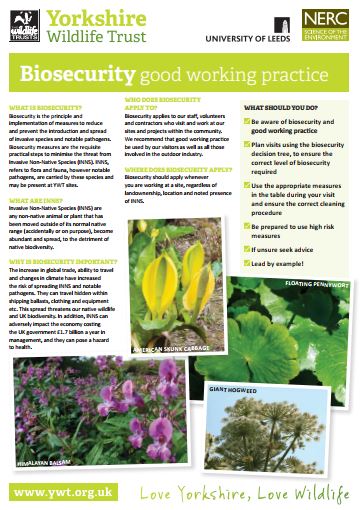
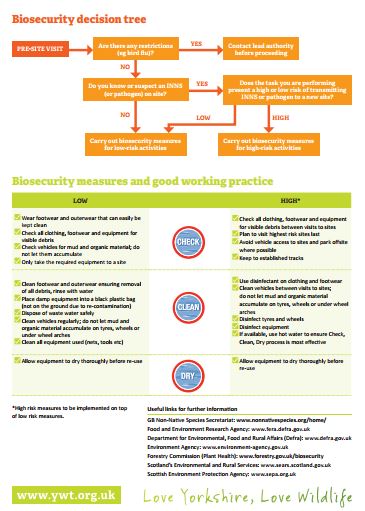
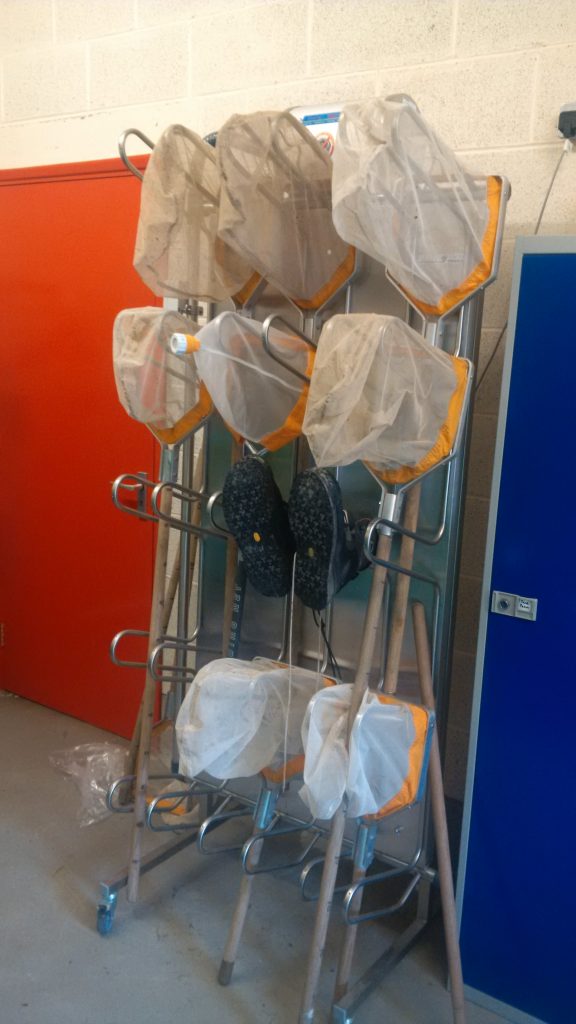
Yorkshire Wildlife Trust (YWT) was one of the first organisations the project engaged. The project has worked in collaboration with YWT, sharing information and learning from their experiences. Through the process and subsequent workshops, the project developed an INNS risk assessment that is used by YWT staff and its voluntary task day leaders. Furthermore, a NERC engagement grant led to the production of evidence-based training resources and biosecurity guides for staff and volunteers. As a result, YWT have invested in biosecurity kits and now conduct biosecurity training for all staff with additional workshops open to volunteers annually. This has led to biosecurity practices being implemented by YWT throughout all high risk activities, including at YWT nature reserves, covering 3,000 hectares throughout the region.
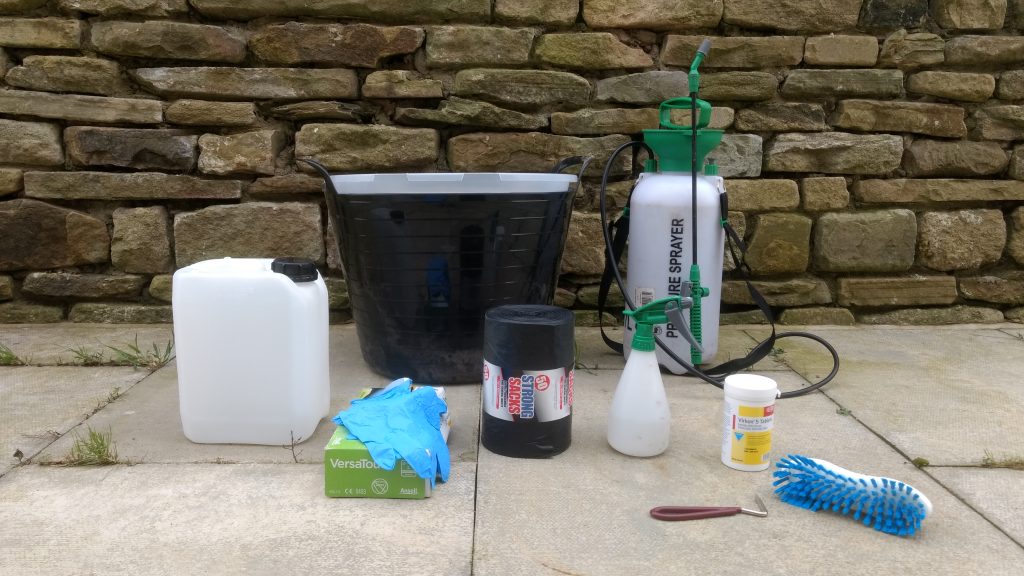
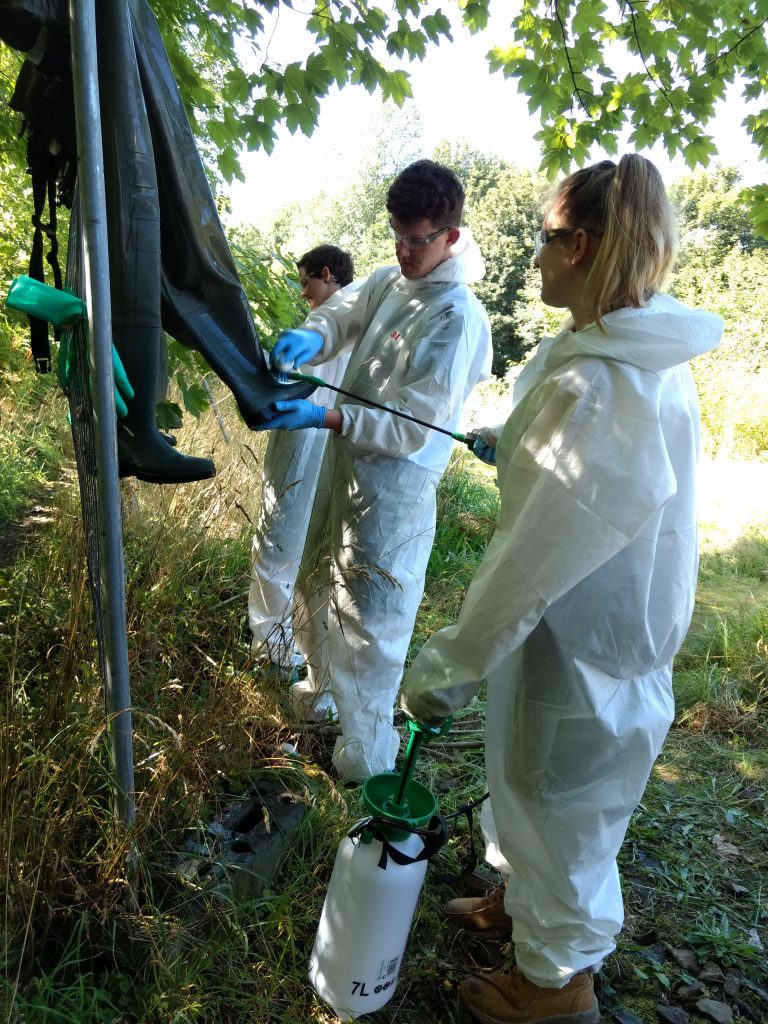
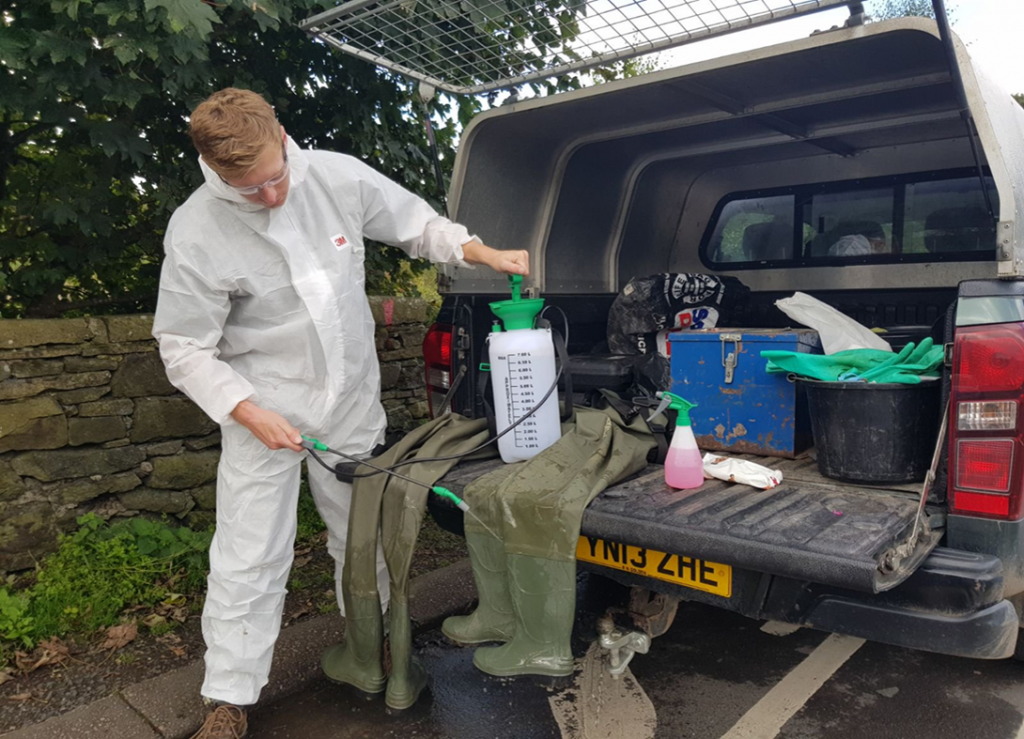
Nidderdale AONB have fully engaged with the project: they now have a biosecurity action plan which they are starting to implement with workshops to train their staff and volunteers, and staff having their own biosecurity kit. Biosecurity is embedded into planning, training and information for volunteers, projects and for events.
Yorkshire Water’s operations have been investigated and a risk assessment and biosecurity action plan tailored to their organisation has been put together. A manual to facilitate the uptake of biosecurity through training, workshops, trial and review processes will be produced.
The group is currently working closely with the Yorkshire Dales National Park Authority to get biosecurity embedded in their everyday practice. This will be done by working with key members from the different National Park Authority teams to understand the risk posed by the diversity of activities between the teams. They are in the process of buying biosecurity equipment to trial with a select number of their teams. They are also working on finalising policies and protocols.
Risk assessments are being put together by the Yorkshire Dales Rivers Trust and the Aire Rivers Trust to understand their biosecurity risks and act upon them in an informed manner.
The National Trust rangers have received in-person biosecurity training and are currently working towards a biosecurity protocol and policy that they can follow at their sites.
For more information about the project please contact Ellie Paganini E.G.Paganini@leeds.ac.uk
